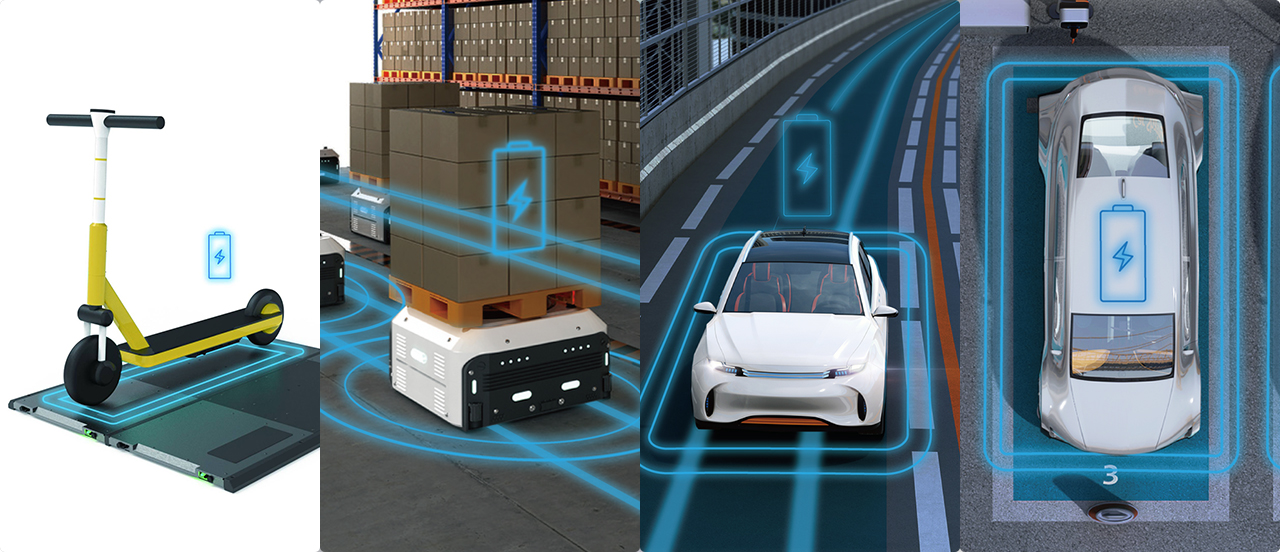
High-power, wide-area wireless charging for mobility both while stationary and in motion.
We design, build, and install wireless power transfer systems tailored to each facility and application, using modular units ranging from 50 W to 10 kW.
Applications include:
• Continuous operation (24/7) environments for robotics such as AGVs/AMRs
• Robotics operating areas that are difficult for human to access, such as construction sites
• Mobility system, such as EVs
We deliver wireless power so seamlessly that you’ll forget you ever needed to charge.
Achievement

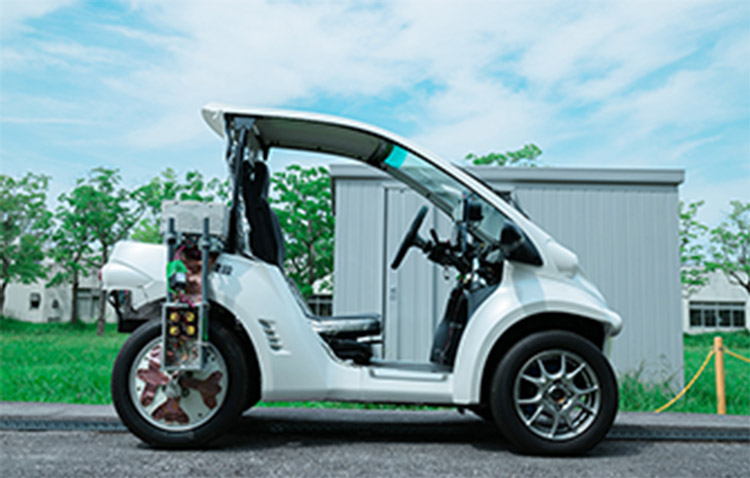
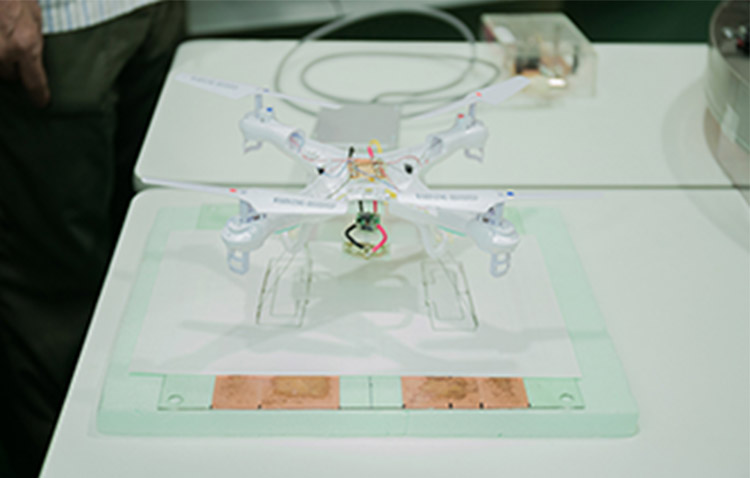
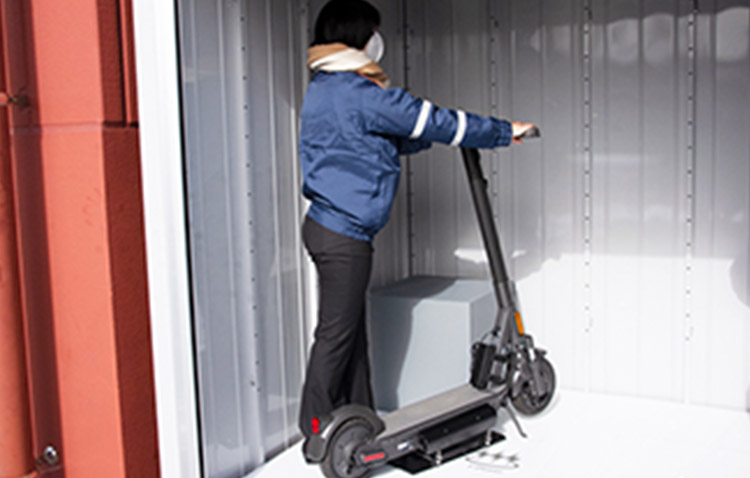
Merit
No manual charging required! Wireless power transfer is an indispensable technology for the labor-saving solutions demanded by future electric mobility. We enable autonomous vehicles and robots to operate continuously and efficiently.
Power can now be delivered in places once considered impractical for wired—such as to vehicles in motion on roads or inside factories, or in automated multi-story parking lots.
Since vehicles can be frequently charged while in operation, the batteries installed in the vehicles can be smaller, lighter, and more cost-effective.
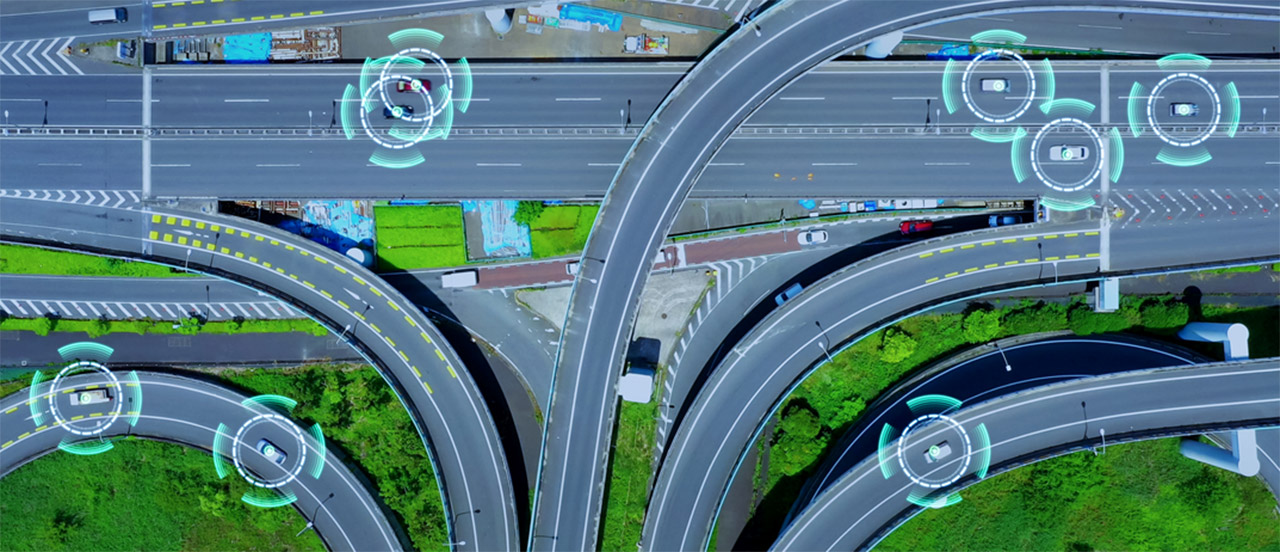
Our wireless power transfer system offers high tolerance to positional misalignment, both while vehicles and robots are moving and they are stationary. Its wide alignment tolerance enables automatic charging not only for autonomous systems but also for mobility devices that are parked imprecisely by human users.
By recognizing target devices and controlling the power output, we can simultaneously power multiple different robots and mobility vehicles. This technology is designed for development as real-world infrastructure.
Other than the inverter, installation simply involves laying down steel plates on floors or roads. Compared to other methods, this technology results in minimal costs for both installation and maintenance.